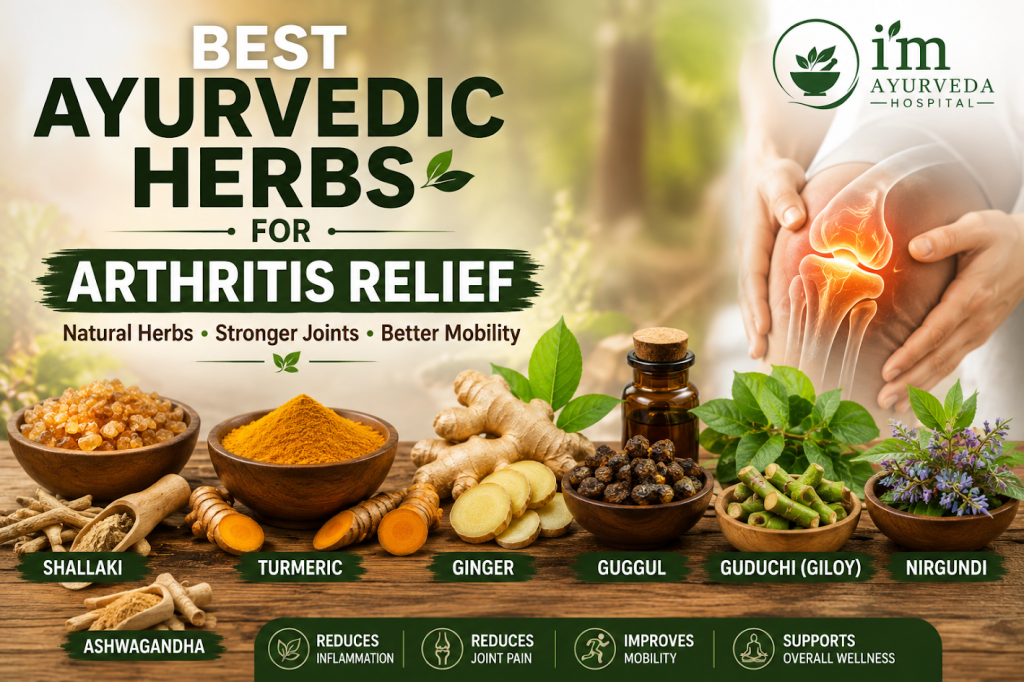
Natural Support for Joint Health
Arthritis can affect everyday movement, making activities such as walking, climbing stairs, exercising, or even performing routine tasks uncomfortable. Common symptoms include joint pain, stiffness, swelling, and reduced mobility.
Ayurveda has traditionally used herbs, diet, massage, and lifestyle practices to support joint health. Several Ayurvedic herbs for arthritis relief are also being studied for their anti-inflammatory, antioxidant, and joint-supporting properties.
Here are some of the most widely used Ayurvedic herbs and how they may contribute to better joint wellness.
How Does Ayurveda Approach Arthritis?
Ayurveda does not treat every type of joint discomfort in the same way. Classical Ayurvedic concepts often associate joint stiffness and pain with disturbances involving Vata dosha, while Ama is traditionally described as an accumulation associated with impaired digestion and metabolism.
An Ayurvedic approach may therefore include herbs alongside dietary modification, gentle exercise, massage, and lifestyle changes.
It is important to distinguish this supportive approach from medical diagnosis. Osteoarthritis, rheumatoid arthritis, gout, and other joint conditions have different causes and may require different treatments.
1. Shallaki (Boswellia Serrata)
Shallaki, commonly known as Indian frankincense or Boswellia, is one of the best-known Ayurvedic herbs for arthritis relief.
Boswellia serrata contains naturally occurring compounds known as boswellic acids. Research has investigated standardized Boswellia extracts for their potential role in supporting joint comfort, physical function, and mobility, particularly in people with osteoarthritis.
In Ayurveda, Shallaki is traditionally incorporated into formulations intended to support comfortable movement and joint function.
2. Turmeric (Haridra)
The familiar golden spice turmeric has an important place in both Indian cooking and Ayurvedic tradition.
Turmeric contains curcuminoids, including curcumin, which have been extensively studied for their anti-inflammatory and antioxidant activity.
Turmeric can easily be incorporated into vegetables, soups, dals, and warm beverages. Concentrated curcumin supplements, however, are different from culinary turmeric and should be taken with professional guidance, particularly by people taking blood-thinning medicines or managing medical conditions.
3. Ashwagandha
Ashwagandha (Withania somnifera) is traditionally classified as a Rasayana, or rejuvenating herb, in Ayurveda.
Rather than being used exclusively for joints, Ashwagandha is traditionally associated with strength, recovery, vitality, and resilience. Its potential anti-inflammatory effects have also attracted scientific interest.
For people whose joint discomfort affects physical activity, Ashwagandha may form part of a broader Ayurvedic wellness programme when considered appropriate by a qualified practitioner.
4. Ginger (Shunthi)
Ginger is much more than a kitchen ingredient. Known as Shunthi in its dried form, it has long been incorporated into Ayurvedic dietary practices.
Ginger contains bioactive constituents such as gingerols and shogaols, which have demonstrated anti-inflammatory and antioxidant activity in research.
Fresh ginger can be added to food or prepared as a warm infusion. Ayurveda also traditionally associates ginger with supporting Agni, or digestive function.
5. Guggul
Guggul is an aromatic resin obtained from Commiphora wightii and has an established place in traditional Ayurvedic formulations.
Different classical formulations containing purified Guggul are traditionally selected according to the individual’s condition and Ayurvedic assessment.
Because Guggul can interact with certain medications and may not be appropriate for everyone, self-prescribing concentrated Guggul products is not advisable. It is better used under qualified Ayurvedic or medical supervision.
6. Guduchi (Giloy)
Guduchi (Tinospora cordifolia), also called Giloy, is traditionally regarded as a significant Ayurvedic herb.
It has historically been used within Ayurvedic wellness practices for metabolic, immune, and inflammatory balance. However, “natural” does not automatically mean risk-free.
Cases of liver injury associated with some Tinospora-containing preparations have been reported. People with liver disease, autoimmune conditions, or those taking regular medicines should therefore seek medical guidance before using concentrated Giloy supplements.
7. Nirgundi
Nirgundi (Vitex negundo) is traditionally used in Ayurveda for musculoskeletal discomfort.
Unlike herbs that are commonly consumed as everyday foods, Nirgundi is frequently associated with Ayurvedic oils and other traditional preparations used externally around stiff or uncomfortable muscles and joints.
Its suitability depends on the individual’s condition, so Ayurvedic practitioner guidance is recommended.
Combining Ayurvedic Herbs With Healthy Joint Habits
Herbs alone should not carry the entire burden of arthritis management. Better long-term joint care generally involves combining appropriate treatment with supportive daily habits.
Consider maintaining a healthy body weight, eating a varied diet rich in vegetables and minimally processed foods, staying adequately hydrated, getting sufficient sleep, and performing regular low-impact activities such as walking, swimming, stretching, or appropriate yoga.
Warm oil massage may provide comfort for some forms of stiffness, but massage and heat should be avoided over acutely injured, hot, red, or significantly swollen joints unless advised by a healthcare professional.
Which Ayurvedic Herb Is Best for Arthritis?
There is no single best Ayurvedic herb for arthritis for every person.
Shallaki and turmeric are among the better-studied herbal options for supporting joint comfort, while Ashwagandha, ginger, Guggul, Guduchi, and Nirgundi have different traditional applications.
The appropriate choice depends on factors such as the type of arthritis, symptoms, age, medications, other medical conditions, and individual Ayurvedic assessment.
When Should You Consult a Doctor?
Joint pain should be medically evaluated when it is persistent, worsening, or associated with substantial swelling, redness, warmth, fever, injury, numbness, unexplained weight loss, or significant loss of movement.
This is particularly important because rheumatoid arthritis and some other inflammatory joint diseases can progressively damage joints if appropriate treatment is delayed.
Final Thoughts
Traditional Ayurveda offers several Ayurvedic herbs for arthritis relief, including Shallaki, turmeric, Ashwagandha, ginger, Guggul, Guduchi, and Nirgundi. Their roles differ, and some have more clinical evidence supporting their use than others.
The most effective approach to joint wellness is generally not about finding one “miracle herb.” Instead, Ayurvedic practices can be integrated responsibly with appropriate diagnosis, physical activity, nutrition, weight management, and professional healthcare.
For personalised herbal recommendations, consult a qualified Ayurvedic practitioner who can evaluate your symptoms, constitution, existing medications, and overall health.
FAQs
Shallaki (Boswellia serrata) is commonly used in Ayurveda for joint health and has also been studied for osteoarthritis-related pain and physical function.
Curcumin in turmeric has anti-inflammatory properties and has been researched for joint discomfort. Culinary turmeric can be part of a balanced diet, while concentrated supplements require greater caution.
Arthritis encompasses multiple conditions, and Ayurveda should not be presented as a guaranteed permanent cure. Treatment generally focuses on controlling symptoms, maintaining function, and improving quality of life.
Not automatically. Herbal preparations can interact with prescription medicines. Discuss supplements with your doctor or qualified Ayurvedic practitioner before combining them with existing treatment.