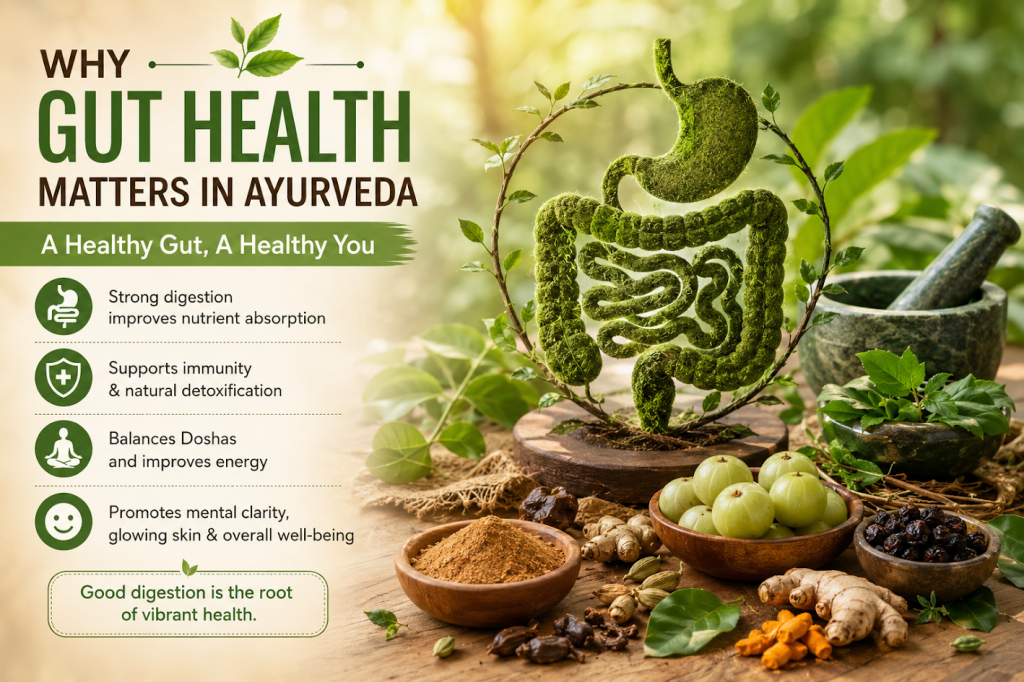
Your digestive system does more than just process food. In Ayurveda, the gut is seen as the base of good health. When your digestion works well, your body gets the nutrients it needs, your immunity stays strong, and your energy remains steady. But if digestion is weak, toxins can build up and affect different organs and systems in your body.
Learning why gut health is important in Ayurveda can help you make choices that support your long-term health, not just treat symptoms as they come up.
What Does Ayurveda Say About Gut Health?
In Ayurveda, the digestive fire called Agni turns food into energy and nutrients. When Agni is healthy, your body digests, absorbs, and eliminates food properly.
If Agni becomes weak or unbalanced, food may not digest fully and can turn into Ama, or toxins. Ayurveda says that Ama can build up in the body and lead to different health problems, such as:
- Indigestion
- Constipation
- Bloating
- Gas and acidity
- Low immunity
- Fatigue
- Skin problems
- Joint discomfort
This is one of the main reasons gut health is so important in Ayurveda. A healthy digestive system helps almost every part of your body work well.
The Three Doshas and Digestive Health
Ayurveda groups people into three types, called doshas:
Vata Dosha
People with dominant Vata may experience:
- Constipation
- Dry stools
- Irregular digestion
- Excess gas
Pitta Dosha
Pitta imbalance often results in:
- Hyperacidity
- Heartburn
- Loose stools
- Burning sensation
Kapha Dosha
Excess Kapha may cause:
- Slow digestion
- Feeling of heaviness
- Weight gain
- Sluggish metabolism
Keeping these doshas balanced with the right diet and lifestyle is a key reason why gut health is important in Ayurveda.
Signs That Your Gut Needs Attention
Your body usually gives you early signs when your digestion is not working as well as it should.
Common symptoms include:
- Frequent bloating
- Constipation
- Excessive gas
- Acid reflux
- Poor appetite
- Bad breath
- Feeling tired after meals
- Irregular bowel movements
- Food intolerance
- Brain fog
If you ignore these symptoms, your overall health could slowly get worse.
Ayurvedic Habits for Better Gut Health
1. Eat According to Your Appetite
Avoid overeating or eating before your previous meal has fully digested. Ayurveda recommends eating only when genuine hunger is present.
2. Eat Fresh, Warm Meals
Freshly cooked food is usually easier to digest than food that is cold or highly processed. Eating warm meals also helps keep your digestive fire healthy.
3. Maintain Regular Meal Timings
Eating at different times each day can upset your digestion. Try to have your meals at about the same time every day.
4. Drink Water Wisely
Instead of drinking a lot of cold water with your meals, Ayurveda suggests sipping small amounts of lukewarm water to help your digestion.
5. Avoid Emotional Eating
Stress, worry, and eating too quickly can make your digestion weaker. Eating calmly and chewing your food well can really help your digestion work better.
6. Stay Physically Active
Simple things like taking a walk after meals and doing yoga regularly can help your digestion and make bowel movements easier.
Foods That Support Gut Health
A gut-friendly Ayurvedic diet generally includes:
- Seasonal fruits
- Fresh vegetables
- Whole grains
- Moong dal
- Rice
- Buttermilk (when suitable)
- Homemade soups
- Ginger
- Cumin
- Fennel
- Turmeric
- Coriander
Including these foods in your diet can help keep your digestion healthy.
Foods That May Disturb Digestion
Cutting back on these foods can help your digestion:
- Deep-fried foods
- Highly processed snacks
- Excess refined sugar
- Carbonated beverages
- Excess alcohol
- Heavy meals late at night
- Excessively cold foods and drinks
Eating these foods in moderation is important for good digestion.
Lifestyle Practices That Improve Digestion
Good digestion depends on more than just what you eat.
Ayurveda also recommends:
- Adequate sleep
- Daily exercise
- Yoga
- Meditation
- Stress management
- Proper hydration
- Regular bowel habits
These simple habits can help keep your digestion healthy in the long run.
Product Placement – I’M Ayurveda Hospital
You should not ignore ongoing digestive problems. If you often have constipation, acidity, bloating, gas, or irregular bowel movements, getting help from a professional can find out what’s causing it.
I’M Ayurveda Hospital uses traditional Ayurvedic methods along with personalized treatment plans to support your digestive health naturally. After looking at your body type (Prakriti), digestive strength (Agni), and overall health, their experienced practitioners suggest a diet, lifestyle changes, herbal treatments, and Panchakarma if needed.
If you want a natural way to improve your digestion, talking to the experts at I’M Ayurveda Hospital can be a good first step toward better long-term health.
Final Thoughts
Knowing why gut health is important in Ayurveda is about more than just avoiding stomach issues. Ayurveda sees digestion as the main support for your body, mind, and immune system. By keeping your digestive fire strong, balancing your doshas, eating mindfully, and following healthy routines, you help your body stay well naturally.
Making small changes to your daily habits and sticking with them can bring the biggest long-term benefits for your digestion.
Frequently Asked Questions (FAQs)
Ayurveda considers the gut the centre of overall health because healthy digestion allows proper nutrient absorption, supports immunity, and helps eliminate toxins from the body.
Agni refers to the body’s digestive fire. It is responsible for breaking down food, absorbing nutrients, and maintaining metabolism. A balanced Agni supports good health.
Ama is the term used in Ayurveda for toxins formed due to incomplete digestion. Excess Ama is believed to contribute to various health problems over time.
Freshly cooked meals, seasonal vegetables, fruits, whole grains, ginger, cumin, fennel, turmeric, and buttermilk (when suitable) are commonly recommended to support healthy digestion.
Yes. Ayurveda recognises that stress and emotional imbalance can weaken digestive fire, leading to bloating, acidity, constipation, and poor nutrient absorption.
Eating on time, chewing food properly, staying physically active, drinking adequate water, managing stress, sleeping well, and following an Ayurvedic-friendly diet can help support healthy digestion naturally.
If you experience recurring constipation, bloating, acidity, indigestion, abdominal discomfort, or irregular bowel movements despite lifestyle changes, it is advisable to consult a qualified Ayurvedic physician for personalised guidance.