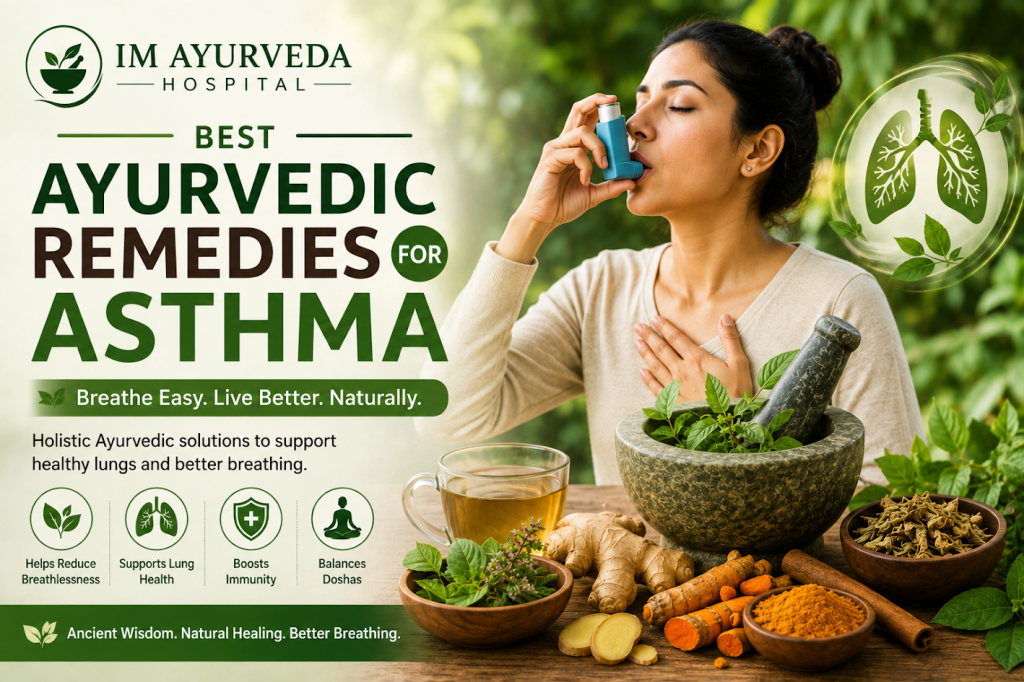
A Holistic Approach to Respiratory Wellness
Asthma is a long-term respiratory condition that can cause wheezing, coughing, chest tightness, and difficulty breathing. Symptoms may worsen due to allergens, air pollution, respiratory infections, exercise, weather changes, or other individual triggers.
Many individuals use Ayurveda as a complementary approach to asthma management, in addition to standard medical care. Ayurveda traditionally links respiratory health to digestion, lifestyle, seasonal changes, immunity, and the balance of Vata and Kapha.
This article from I’M Ayurveda Hospital reviews leading Ayurvedic remedies for asthma, emphasising traditional practices and supportive lifestyle measures without making claims of a permanent cure.
Important: Asthma can become life-threatening. Ayurvedic remedies should not replace prescribed inhalers or emergency asthma treatment. Evidence for herbal treatments specifically for asthma remains insufficient, and some herbs can interact with conventional medicines.
Understanding Asthma Through Ayurveda
In Ayurvedic literature, breathing difficulties resembling bronchial asthma are traditionally discussed under Tamaka Shwasa. Ayurveda may evaluate respiratory symptoms alongside Dosha balance, digestive function (Agni), accumulated Kapha, lifestyle, diet, environmental exposure, and individual constitution.
This does not mean that asthma should be diagnosed solely through Ayurvedic concepts. Modern asthma diagnosis and monitoring remain important.
I’M Ayurveda Hospital combines traditional Ayurvedic assessment with medical expertise to develop responsible, individualised respiratory wellness plans.
1. Tulsi for Traditional Respiratory Support
Tulsi (Ocimum sanctum or Ocimum tenuiflorum) has an established place in traditional Indian wellness practices.
Tulsi is often consumed as a herbal infusion or included in traditional formulations. Ayurveda associates Tulsi with respiratory and Kapha-related wellness.
However, Tulsi should not be presented as an asthma cure or as a replacement for prescribed asthma medication. Research on herbal products for asthma remains limited, and individual responses can vary.
2. Ginger and Warming Dietary Practices
Ginger is widely used in Ayurveda and traditional Indian diets. Its warming nature makes it a common ingredient in preparations intended to support digestion and respiratory comfort.
Incorporating moderate amounts of fresh ginger into a balanced diet may be a practical wellness habit for those exploring natural asthma remedies.
However, consuming ginger or ginger preparations cannot replace controller medication or rescue treatment during an asthma attack.
3. Turmeric as Part of a Balanced Diet
Turmeric (Curcuma longa) contains curcumin and is traditionally valued for its various wellness properties.
Turmeric can be included as a culinary spice in a balanced diet. However, concentrated turmeric or curcumin supplements should not be used as Ayurvedic remedies for asthma, especially when other medications are involved.
The safety and effectiveness of herbal preparations for asthma have not been established sufficiently to recommend them as substitutes for standard treatment.
4. Practice Gentle Breathing Exercises
Breathing practices are an important part of traditional yoga and Ayurveda.
Gentle techniques, such as slow, controlled breathing or properly taught Nadi Shodhana, may support relaxation and improve awareness of breathing patterns.
Proper instruction is essential. Individuals with asthma should avoid forceful breathing exercises or prolonged breath retention during respiratory distress.
Breathing exercises should complement, not replace, inhalers, prescribed medications, or an asthma action plan.
5. Maintain Digestive Balance
Ayurveda places significant importance on Agni, or digestive capacity. Maintaining healthy digestion is considered essential for overall systemic balance.
Simple habits can include:
- Eating regular meals
- Avoiding habitual overeating
- Choosing freshly prepared foods
- Limiting excessive ultra-processed foods
- Maintaining appropriate hydration
- Paying attention to foods that personally trigger symptoms
There is no universal Ayurvedic asthma diet. Individuals should not eliminate major food groups without professional guidance.
6. Reduce Exposure to Respiratory Triggers
Creating a healthier environment is a practical aspect of Ayurvedic asthma management.
Common respiratory triggers can include:
- Tobacco smoke
- Dust
- Household allergens
- Strong fragrances
- Air pollution
- Mold
- Cold air
- Certain occupational exposures
Reducing exposure to known personal triggers may help prevent symptom worsening.
In areas with significant air pollution, monitor local air quality and limit outdoor exposure during severe pollution episodes.
7. Maintain Healthy Sleep and Daily Routine
Ayurveda emphasises Dinacharya, or a consistent daily routine.
Poor sleep, irregular schedules, stress, and fatigue can impact overall well-being and make chronic conditions harder to manage.
A structured routine can include:
- Consistent sleeping and waking times
- Regular meals
- Appropriate physical activity
- Adequate rest
- Stress-management practices
- Reduced exposure to smoke and irritants
These lifestyle measures are among the safest ways to apply Ayurvedic principles for long-term respiratory wellness.
8. Ayurvedic Herbs Should Be Individually Selected
Ayurvedic traditions include numerous herbs used in respiratory wellness, including Tulsi, Vasaka (Adhatoda vasica), Yashtimadhu (licorice), Pippali, and turmeric.
Ayurvedic medicines for asthma should not be selected solely from online lists of herbs.
Dosage, formulation, quality, medical history, allergies, pregnancy status, age, and current medications are all important. Some herbal products may interact with asthma medicines or contain unsuitable ingredients.
Professional Ayurvedic consultation is recommended instead of self-prescribing multiple herbal preparations.
9. Consider Ayurvedic Therapies Under Professional Supervision
Depending on an individual’s assessment, Ayurvedic practitioners may consider traditional therapies as part of a broader respiratory-care program.
Panchakarma and other Ayurvedic procedures should be performed only when indicated and under the supervision of qualified practitioners.
They should never be used as an emergency intervention for an asthma attack.
Can Ayurveda Cure Asthma Permanently?
There is currently insufficient evidence to claim that Ayurvedic herbs or therapies can permanently cure asthma. Systematic reviews have found that research on herbal interventions is limited and inconsistent.
Asthma is often effectively managed with an appropriate plan. Ayurvedic lifestyle practices may offer complementary support, but prescribed asthma treatment should not be stopped without medical advice.
When Is Asthma an Emergency?
A severe asthma attack can become an emergency.
Seek urgent medical attention if breathing becomes severely difficult, symptoms rapidly worsen, speaking becomes difficult because of breathlessness, lips or face appear blue or grey, or prescribed rescue medication is not providing adequate relief.
Do not attempt to manage severe breathing difficulty solely with herbal remedies, steam, oils, or home preparations.
Why Choose I’M Ayurveda Hospital for Ayurvedic Respiratory Care?
At I’M Ayurveda Hospital, Ayurvedic care is tailored to each individual rather than using a one-size-fits-all approach.
An Ayurvedic consultation may consider respiratory symptoms, lifestyle, diet, digestion, sleep, environmental triggers, constitution, and existing medical treatment before recommending an appropriate wellness strategy.
The goal is to integrate traditional Ayurvedic principles responsibly, prioritising patient safety and appropriate medical care.
Overview
The best Ayurvedic remedies for asthma are not limited to a single herb or home remedy. A responsible approach combines traditional herbal knowledge with a suitable diet, breathing practices, healthy routines, trigger management, stress reduction, and professional guidance.
Ayurveda offers a holistic framework for respiratory wellness, but it should be used alongside, not in place of, evidence-based asthma treatment.
At I’M Ayurveda Hospital, individuals can explore personalised Ayurvedic guidance designed around their unique health and lifestyle requirements.
Frequently Asked Questions About Ayurvedic Asthma Care
At present, there is no reliable evidence that asthma can be permanently cured through natural remedies or Ayurveda. Asthma is a chronic respiratory condition, although many people can achieve good symptom control with appropriate treatment and trigger management. Ayurvedic practices may be considered complementary support, particularly around lifestyle, stress management, diet, and individualised wellness. They should not replace prescribed asthma medicines or an established asthma-management plan.
At I’M Ayurveda Hospital, Ayurvedic care can be personalised according to the individual’s symptoms, constitution, lifestyle, dietary habits, and overall health.
There is no single natural remedy that can reliably eliminate asthma. A safer approach is to combine appropriate medical care with supportive lifestyle measures such as identifying personal triggers, avoiding smoke and excessive air pollution, maintaining healthy sleep, staying physically active as appropriate, managing stress, and following a balanced diet.
Ayurvedic practices such as yoga, meditation, and selected breathing exercises may be used as complementary approaches. Research suggests that yoga may provide small improvements in quality of life and asthma symptoms, although it should be used alongside standard asthma care.
Natural approaches that may support overall asthma management include avoiding known triggers, maintaining a healthy lifestyle, practising appropriate relaxation techniques, and incorporating suitable yoga or breathing practices.
Ayurvedic herbs such as Tulsi, Vasaka, Yashtimadhu, and Pippali have traditionally been used in respiratory wellness. However, there is currently insufficient evidence to recommend herbal products as a replacement for established asthma treatment. Some herbs can also interact with medicines.
For this reason, herbal formulations should preferably be selected with guidance from a qualified Ayurvedic practitioner.
There is no single best Ayurvedic treatment for asthma for every person. Ayurveda traditionally individualises treatment according to symptoms, constitution, lifestyle, diet, digestion, and other factors.
Depending on professional assessment, an Ayurvedic practitioner may consider dietary recommendations, lifestyle modifications, yoga or relaxation practices, traditionally used herbs, or selected Ayurvedic therapies.
At I’M Ayurveda Hospital, treatment should be based on individual assessment rather than self-prescribing a particular herb or formulation.
Yes, Ayurveda is definitely used as a complementary approach to asthma management, particularly through individualised lifestyle guidance, yoga, pranayama, dietary practices, and traditionally used herbs and preparations.
Blowing a conch shell during Hindu worship is one of the best ways to prevent the risk of having asthma. Science and experiments may or may not approve it, but this is what local vaidya & hakims have noticed for thousands of years.
At I’M Ayurveda Hospital, Ayurvedic care can be tailored to the individual’s respiratory symptoms, lifestyle, constitution, and existing treatment.