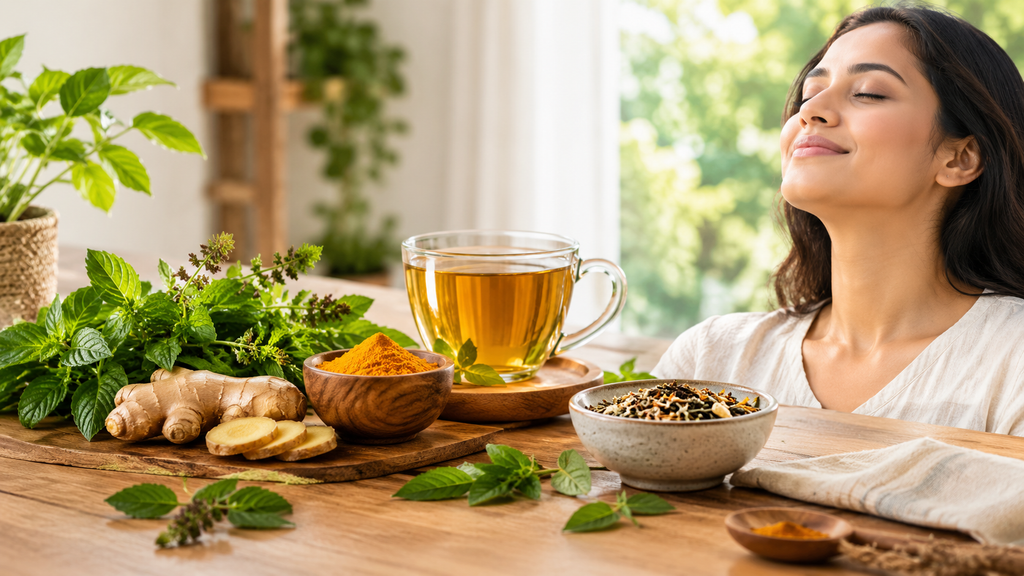
Seasonal changes can be refreshing, but they may also bring sneezing, nasal congestion, watery eyes, throat irritation, and coughing for people who are sensitive to pollen, dust, and other environmental allergens. Seasonal allergies can affect sleep, concentration, outdoor activities, and overall comfort.
Ayurveda takes a holistic approach to seasonal wellness. It emphasizes maintaining a balanced daily routine, supporting digestion, choosing suitable foods, and adapting lifestyle habits according to changes in weather and environment.
Understanding Seasonal Allergies
Seasonal allergies occur when the body’s immune system reacts to substances that are generally harmless, such as pollen from plants and trees. When exposed to a trigger, the body can release chemicals that cause symptoms such as sneezing, itching, watery eyes, and a runny or blocked nose.
Common seasonal allergy triggers include:
- Pollen from trees, grasses, and weeds
- Dust and dust mites
- Mold spores
- Changes in temperature and humidity
- Airborne environmental irritants
Identifying personal triggers can be an important part of managing recurring symptoms.
Common Symptoms of Seasonal Allergies
Seasonal allergies may cause different combinations of symptoms, including:
- Repeated sneezing
- Runny or stuffy nose
- Itchy nose or throat
- Watery, red, or itchy eyes
- Post-nasal drainage
- Mild cough
- Nasal congestion
- Head or facial pressure
- Feeling tired because of disturbed sleep
Symptoms can vary depending on the allergen and the individual’s sensitivity.
Ayurvedic Perspective on Seasonal Wellness
Ayurveda traditionally emphasizes adapting daily habits to seasonal changes. This concept is often referred to as Ritucharya, or seasonal routine.
Instead of following exactly the same routine throughout the year, Ayurveda encourages paying attention to changes in climate, diet, activity, sleep, and overall well-being.
A seasonal wellness routine may include:
- Eating fresh and balanced meals
- Staying adequately hydrated
- Maintaining regular sleep
- Keeping the surrounding environment clean
- Practicing appropriate physical activity
- Avoiding known environmental triggers
1. Start Your Day With Adequate Hydration
Staying hydrated is an important part of everyday wellness. Drinking sufficient water throughout the day helps maintain normal body functions.
Warm water or a mild herbal beverage can also be comforting when the throat feels irritated. However, very hot drinks should be avoided if they cause discomfort.
2. Add Ginger to Your Meals
Ginger is a traditional ingredient widely used in Indian cooking and Ayurvedic practices. It can be added to meals, soups, or a mild warm beverage.
Ginger should be used as a food ingredient rather than as a substitute for allergy medication or professional treatment.
3. Include Turmeric in a Balanced Diet
Turmeric has a long history of culinary and traditional use. Adding turmeric to everyday meals can be an easy way to include it in a balanced diet.
People taking medications or using concentrated herbal preparations should speak with a healthcare professional before using turmeric supplements.
4. Maintain a Clean Living Environment
Reducing exposure to allergens can be especially helpful for people who know their specific triggers.
Consider:
- Washing bedding regularly
- Cleaning dust from frequently used surfaces
- Keeping indoor spaces clean
- Avoiding unnecessary accumulation of dust
- Washing your face and hands after spending time outdoors
- Changing clothes after prolonged outdoor exposure during high-pollen periods
5. Protect Yourself During High-Pollen Periods
If pollen is one of your triggers, check local pollen information when available and plan outdoor activities accordingly.
When pollen levels are high, keeping windows closed when practical and changing clothes after outdoor activities may reduce exposure.
6. Pay Attention to Your Diet
A varied and balanced diet provides nutrients needed for general health. Include vegetables, fruits, whole grains, pulses, nuts, and other nutritious foods according to your individual dietary needs.
Rather than relying on a single “allergy-fighting” food, focus on an overall healthy eating pattern.
7. Practice Gentle Breathing Exercises
Gentle breathing exercises can be incorporated into a relaxation routine. They may help you feel more comfortable and relaxed, although they should not be considered a treatment for an allergic reaction.
If breathing itself is difficult because of an allergy or asthma symptoms, seek medical attention rather than relying on breathing exercises.
8. Get Enough Sleep
Allergy symptoms can interfere with sleep, especially when nasal congestion or itching becomes worse at night.
Maintaining a regular bedtime, keeping the bedroom clean, and reducing known allergens in the sleeping environment can support better sleep quality.
9. Choose an Individualized Approach
Ayurvedic wellness is traditionally individualized rather than based on one remedy for everyone. Factors such as constitution, lifestyle, diet, environment, and existing health conditions may be considered.
If you are considering Ayurvedic medicines or herbal formulations for recurring allergies, consult a qualified Ayurvedic practitioner or healthcare professional for personalized guidance.
Seasonal Allergy Prevention Tips
Along with lifestyle practices, reducing exposure to known triggers can be useful.
If pollen triggers your symptoms:
- Limit prolonged outdoor exposure during high-pollen periods.
- Keep windows closed when pollen levels are high.
- Shower and change clothes after spending extended time outdoors.
- Wash bedding regularly.
If dust is a trigger:
- Clean surfaces regularly.
- Wash bedding frequently.
- Reduce dust accumulation in the bedroom.
- Consider appropriate dust-control measures recommended by a healthcare professional.
If mold is a trigger:
- Keep damp areas dry and well maintained.
- Address visible mold promptly.
- Improve ventilation in moisture-prone areas.
Ayurveda and Seasonal Changes: A Holistic Routine
Ayurveda encourages people to pay attention to how their body responds to seasonal changes. A healthy routine can include nutritious food, adequate hydration, regular sleep, appropriate activity, stress management, and minimizing exposure to environmental irritants.
The goal is not simply to address one symptom but to support overall health and maintain a sustainable daily routine.
Frequently Asked Questions
Ayurvedic wellness practices may include maintaining a seasonal routine, staying hydrated, eating a balanced diet, using traditional culinary ingredients such as ginger and turmeric, maintaining nasal and environmental hygiene, and reducing exposure to known allergens. For persistent symptoms, consult a qualified healthcare professional.
There is no guarantee that Ayurveda or any single remedy will permanently eliminate seasonal allergies. Allergies can recur when a person is exposed to their triggers. A healthcare professional can help identify triggers and recommend appropriate management.
Water and warm, non-irritating beverages can help maintain hydration. Some people include ginger-based beverages as part of their routine. If you have a medical condition or take medication, check with your healthcare professional before regularly using concentrated herbal preparations.
Turmeric is traditionally used as a food and herbal ingredient. While it may be included in a balanced diet, it should not be considered a proven replacement for allergy treatment. Turmeric supplements may also interact with certain medicines.
Ginger is commonly used in traditional diets and Ayurvedic practices. It can be included in meals or beverages as part of a healthy routine. However, it should not replace appropriate medical treatment for allergies.