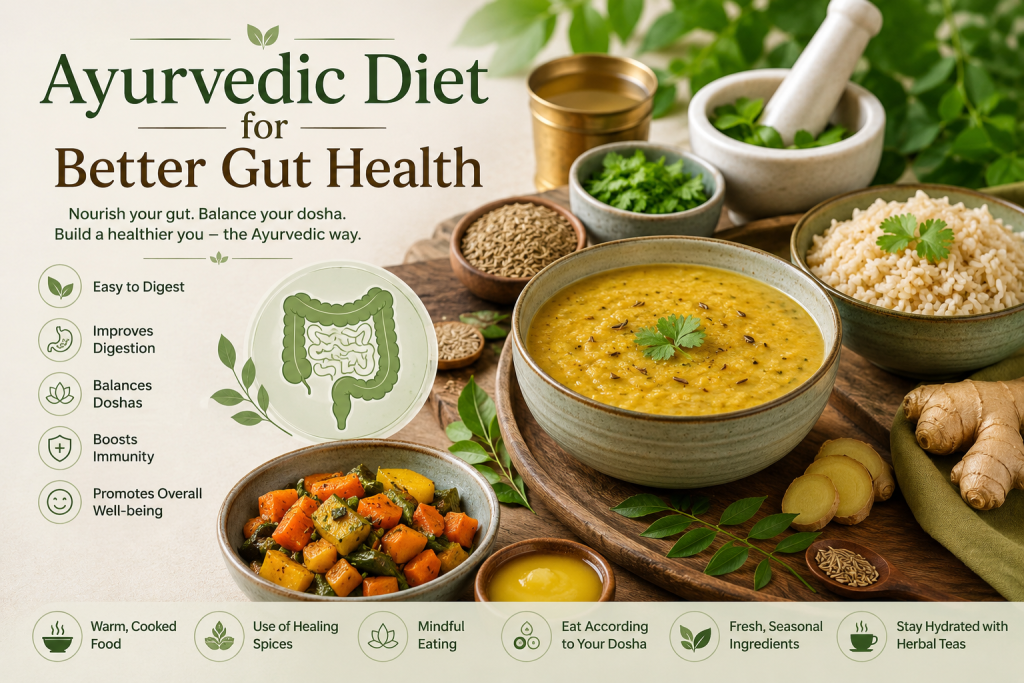
A Natural Way to Improve Digestion and Overall Wellness
A healthy gut is the foundation of a healthy body. According to Ayurveda, nearly every aspect of wellness begins with proper digestion. Whether you’re dealing with bloating, acidity, constipation, gas, or irregular bowel movements, your digestive system is sending signals that it needs attention. Instead of masking symptoms, Ayurveda focuses on restoring digestive balance through mindful eating and natural foods.
In today’s fast-paced lifestyle, processed foods, stress, irregular meal timings, and poor eating habits have weakened digestive health for many people. An Ayurvedic diet for better gut health helps restore the body’s natural digestive fire, improves nutrient absorption, and supports a balanced gut microbiome naturally.
Why Gut Health Matters in Ayurveda
Ayurveda explains digestion with the idea of Agni, or digestive fire. When Agni is strong, your body digests food well, absorbs nutrients, and gets rid of waste. If Agni is weak, toxins called Ama can build up, causing digestive problems and other health issues over time.
Common signs of poor gut health include:
- Frequent bloating
- Gas after meals
- Acidity or heartburn
- Constipation
- Loose stools
- Indigestion
- Low energy
- Bad breath
- Heavy feeling after eating
An Ayurvedic diet focuses on making your digestion stronger instead of just treating the symptoms.
Principles of an Ayurvedic Diet for Better Gut Health
Eat Fresh, Warm, and Easily Digestible Foods
Meals made fresh are easier for your body to digest than foods that are refrigerated or processed. Eating warm foods also helps your digestion and keeps your metabolism healthy.
Ideal choices include:
- Khichdi made with rice and moong dal
- Vegetable soups
- Steamed vegetables
- Fresh chapatis
- Light dals
- Seasonal fruits
Avoid stale food, frozen meals, and excessive packaged snacks.
Follow Regular Meal Timings
Ayurveda emphasises eating meals at consistent times every day. Irregular eating weakens digestion and disrupts natural digestive rhythms.
Simple routine:
- Warm water after waking up
- Healthy breakfast
- The largest meal during lunch
- Light dinner before bedtime
- Avoid late-night eating
Maintaining a consistent eating schedule improves digestion and bowel regularity.
Include Gut-Friendly Ayurvedic Spices
Many common spices can help your digestion and reduce gas, all without unwanted side effects.
Helpful digestive spices include:
- Cumin
- Coriander
- Fennel
- Ginger
- Turmeric
- Black pepper
- Ajwain
- Hing (Asafoetida)
These spices boost digestion, help with bloating, and make it easier for your body to absorb nutrients.
Eat According to Your Dosha
Ayurveda suggests choosing foods based on your body type, known as Vata, Pitta, or Kapha.
For Vata
Choose warm, cooked, slightly oily foods.
Good options:
- Ghee
- Cooked vegetables
- Rice
- Soups
- Sesame oil
It’s best to limit raw salads and cold foods.
For Pitta
Cooling foods work best.
Choose:
- Cucumber
- Coconut water
- Sweet fruits
- Leafy vegetables
- Buttermilk
Reduce spicy, oily, and fried foods.
For Kapha
Eat lighter meals with warming spices.
Best foods include:
- Millets
- Lentils
- Ginger tea
- Green vegetables
- Light soups
Limit sweets and dairy products.
Ayurvedic Foods That Improve Gut Health Naturally
Several traditional foods nourish beneficial gut bacteria while supporting digestion.
Homemade Buttermilk
Fresh buttermilk with roasted cumin and rock salt improves digestion and supports healthy intestinal bacteria.
Ghee
Pure cow ghee helps keep your digestive tract smooth and supports regular bowel movements when you eat it in moderation. Moong dal is one of Ayurveda’s most recommended foods for digestive wellness.
Seasonal Fruits
Papaya, pomegranate, ripe bananas, apples, and pears all support digestion and provide natural fibre.
Cooked Vegetables
Bottle gourd, pumpkin, spinach, carrots, ridge gourd, and ash gourd are all easy on your digestive system.
Hydration According to Ayurveda
Staying hydrated is important, but Ayurveda advises against drinking too much cold water with your meals.
Instead:
- Sip warm water throughout the day.
- Drink herbal teas with ginger or fennel.
- Avoid sugary beverages and carbonated drinks.
- Consume water between meals rather than immediately after eating.
Drinking warm water can help your digestion and reduce bloating.
Foods to Avoid for Better Gut Health
Certain foods can upset your digestion and lead to a buildup of toxins.
Limit or avoid:
- Deep-fried foods
- Excess sugar
- Soft drinks
- Refined flour products
- Processed snacks
- Excessive cheese
- Heavy desserts
- Packaged fast food
- Alcohol
- Overeating
Reducing these foods allows your digestive system to recover naturally.
Lifestyle Habits That Support Gut Health
Diet alone is not enough. Ayurveda recommends healthy daily habits that strengthen digestion.
These include:
- Eat mindfully without distractions.
- Chew food thoroughly.
- Walk for 10–15 minutes after meals.
- Sleep on time.
- Manage stress through meditation.
- Practice Yoga regularly.
- Avoid eating when emotionally upset.
Simple breathing exercises and yoga poses like Vajrasana, can further support digestion.
Best Ayurvedic Herbs for Digestive Wellness
Several Ayurvedic herbs have traditionally been used to maintain digestive balance.
Popular herbs include:
- Triphala
- Amla
- Ginger
- Licorice (Yashtimadhu)
- Guduchi
- Bael
- Haritaki
It’s best to use these herbs with advice from a qualified Ayurvedic practitioner, especially if you have any health conditions.
Frequently Asked Questions
Khichdi, homemade buttermilk, moong dal, cow ghee, cooked vegetables, and seasonal fruits are among the best Ayurvedic foods for naturally improving digestion.
Many people notice reduced bloating and better digestion within a few weeks of consistently following Ayurvedic dietary principles. Long-term digestive balance depends on regular healthy habits.
Ayurveda focuses on restoring digestive balance by improving Agni, reducing Ama, and supporting healthy eating habits. It may help manage common digestive issues naturally, but a qualified healthcare professional should evaluate persistent or severe symptoms.
Yes. Ayurveda recommends warm water because it supports digestion, helps reduce bloating, and assists the body’s natural cleansing process.
Overview
A healthy digestive system is the cornerstone of overall wellness, and Ayurveda offers a practical, time-tested approach to achieving it. By eating fresh, seasonal foods, following regular meal timings, using digestive spices, staying hydrated, and adopting mindful lifestyle habits, you can naturally support better gut health and improve your daily energy levels.
Instead of following restrictive diets or relying solely on temporary solutions, an Ayurvedic diet for better gut health encourages sustainable habits that nourish your digestive system from within. Small daily changes, practised consistently, can make a significant difference in how you feel, digest, and thrive.