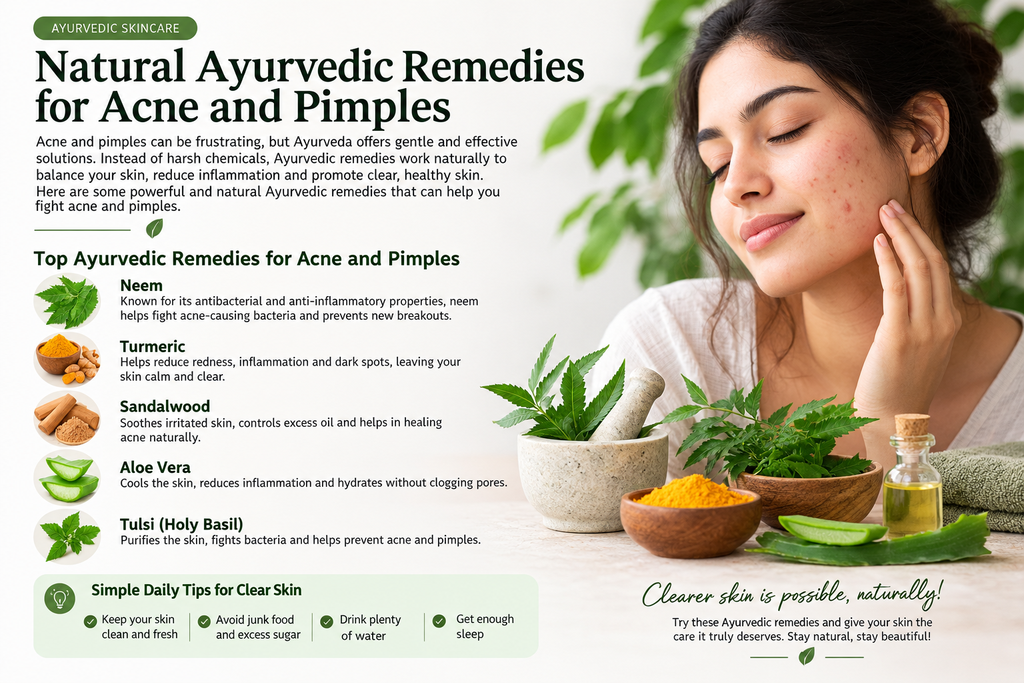
Acne and pimples are common skin concerns that can affect people of all ages. Occasional breakouts may be related to excess oil, clogged pores, hormonal changes, stress, diet, or an unsuitable skincare routine. While many modern products focus on controlling visible symptoms, Ayurveda takes a broader approach by considering skin health, lifestyle, digestion, and individual constitution.
Ayurvedic skincare focuses on maintaining balance and supporting healthy-looking skin through appropriate herbs, nutrition, daily habits, and gentle skincare practices.
What Causes Acne and Pimples?
Acne develops when hair follicles become clogged with oil and dead skin cells. Bacteria, inflammation, hormonal fluctuations, stress, and certain lifestyle factors can contribute to breakouts.
From an Ayurvedic perspective, skin concerns may also be associated with an imbalance in the body’s doshas and factors such as diet, digestion, stress, sleep, and daily routine. Because every person’s constitution is different, the most suitable Ayurvedic approach may vary from person to person.
Natural Ayurvedic Remedies for Acne and Pimples
1. Neem
Neem has traditionally been used in Ayurveda for maintaining healthy skin. It is known for its cleansing and soothing properties and is commonly included in herbal skincare preparations.
Neem-based products may be used as part of a gentle skincare routine. However, concentrated neem preparations should not be applied directly to irritated or broken skin without appropriate guidance.
2. Turmeric
Turmeric is one of the best-known Ayurvedic herbs and has traditionally been used for its soothing properties.
Its active compound, curcumin, has been studied for its anti-inflammatory and antioxidant properties. Turmeric may be included in skincare formulations designed to support calm and healthy-looking skin.
Avoid applying kitchen turmeric directly to the face if you have sensitive skin, as it can cause irritation or staining.
3. Aloe Vera
Aloe vera is widely used for its cooling and hydrating properties. It can help soothe skin that feels dry or irritated and may be a useful addition to a gentle skincare routine.
Choose a suitable, fragrance-free aloe vera gel and perform a patch test before applying it to a larger area of the face.
4. Tulsi
Tulsi, also known as holy basil, has a long history of use in Ayurveda. It contains naturally occurring plant compounds with antioxidant properties.
Tulsi may be included in traditional herbal preparations and skincare routines. For acne-prone skin, gentle formulations are generally preferable to harsh homemade applications.
5. Sandalwood
Sandalwood has traditionally been used in Ayurvedic skincare for its cooling and soothing qualities. It is often included in preparations intended for oily or irritated skin.
If using a sandalwood-based product, choose a properly formulated preparation rather than applying unknown or concentrated essential oils directly to the face.
Ayurvedic Lifestyle Tips for Healthier Skin
Skincare is only one part of maintaining healthy-looking skin. Your everyday habits can also make a difference.
Maintain a Balanced Diet
Include plenty of vegetables, fruits, whole grains, pulses, and other nutrient-rich foods in your diet. Try to limit excessive intake of highly processed foods and added sugars.
Stay Hydrated
Drink enough water throughout the day according to your body’s needs. Proper hydration supports overall health and helps maintain normal skin function.
Get Enough Sleep
Poor sleep and ongoing stress can affect overall wellbeing and may contribute to skin concerns. Aim for a consistent and adequate sleep schedule.
Keep Your Face Clean
Wash your face gently, especially after sweating. Avoid repeatedly scrubbing the skin, as excessive friction can irritate acne-prone skin.
Avoid Touching or Picking Pimples
Picking or squeezing pimples can worsen inflammation and may increase the risk of temporary marks or scarring. Allow the skin to heal naturally and use gentle skincare products.
Choose Products Carefully
Look for skincare products that are suitable for your skin type and avoid products that cause irritation. If you have acne-prone skin, non-comedogenic products may be preferable.
Can Ayurveda Help With Acne?
Ayurveda can offer a holistic approach to supporting skin health. An Ayurvedic practitioner may consider factors such as your individual constitution, lifestyle, diet, digestion, and the nature of your skin concerns before suggesting an appropriate approach.
However, persistent, painful, severe, or cystic acne may require evaluation by a qualified dermatologist or healthcare professional. Ayurvedic care should complement appropriate medical care rather than replace necessary treatment.
A Simple Ayurvedic Skincare Routine
A simple routine can help you maintain healthy-looking skin:
Morning
- Gently cleanse your face.
- Use a suitable moisturizer.
- Apply broad-spectrum sunscreen during the day.
Evening
- Cleanse your face gently.
- Use a suitable, soothing skincare product.
- Avoid heavy or irritating products if they trigger breakouts.
Consistency is generally more helpful than using multiple products at once.
When Should You Consult a Professional?
Occasional pimples are common, but professional advice may be appropriate if you experience:
- Persistent or severe acne
- Painful or deep pimples
- Acne that is leaving scars or dark marks
- Frequent breakouts that do not improve
- Significant skin irritation
- Acne that is affecting your confidence or daily life
A qualified healthcare professional can help identify possible contributing factors and recommend an appropriate treatment plan.
Final Thoughts
Healthy skin is not just about treating individual pimples. A balanced lifestyle, gentle skincare routine, nutritious diet, adequate sleep, and appropriate professional guidance can all contribute to better skin health.
Ayurveda offers a traditional, holistic approach that focuses on supporting balance and overall wellbeing. Natural ingredients such as neem, turmeric, aloe vera, tulsi, and sandalwood have long been used in Ayurvedic skincare, but they should be used appropriately and with consideration for individual skin sensitivity.
If acne is persistent or severe, consult a qualified healthcare professional to determine the most suitable treatment for your skin.
Frequently Asked Questions
There is no single remedy that works best for everyone. Ayurvedic approaches may include herbs such as neem, turmeric, tulsi, aloe vera, and sandalwood along with appropriate diet, lifestyle, and skincare practices.
Acne can have several contributing factors, including hormones, genetics, skincare, stress, and lifestyle. Ayurveda may help support overall skin health, but it is not appropriate to promise a permanent cure. Persistent acne should be assessed by a qualified healthcare professional.
Neem has traditionally been used in Ayurvedic skincare because of its cleansing and soothing properties. Neem-based skincare products may be suitable for some people, but sensitive skin can react to concentrated preparations.
It is better to avoid applying raw kitchen turmeric directly to active pimples, especially if you have sensitive skin. It can irritate the skin and may stain it. A properly formulated skincare product is a safer option.
Aloe vera can help soothe and hydrate the skin. Choose a gentle, suitable product and perform a patch test before using it more widely.