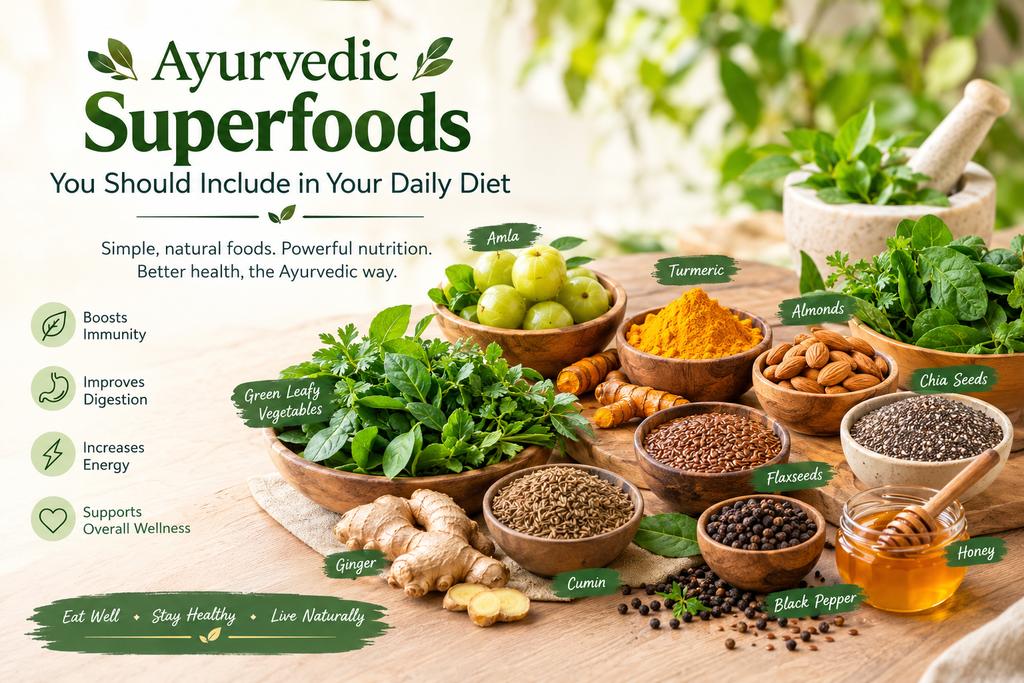
In today’s busy lifestyle, maintaining a healthy and balanced diet can sometimes feel difficult. We often rely on packaged foods, quick meals, and sugary snacks, while overlooking simple, nutrient-rich foods that have been part of traditional Indian diets for generations.
Ayurveda places great importance on Ahara (food) as an essential part of maintaining overall well-being. A balanced diet, appropriate food choices, mindful eating, and healthy daily routines can support digestion, energy, and general wellness.
Many traditional foods commonly used in Indian households are naturally rich in nutrients such as vitamins, minerals, fiber, healthy fats, and antioxidants. These foods can easily become part of a balanced everyday diet.
In this article, we explore some Ayurvedic superfoods that you can include in your daily meals.
What Are Ayurvedic Superfoods?
The term “superfood” generally refers to foods that are particularly nutrient-dense. Ayurveda does not use the modern term “superfood” in exactly the same way, but traditional Ayurvedic nutrition emphasizes fresh, wholesome, seasonal, and appropriately prepared foods.
Rather than depending on one particular ingredient, Ayurveda encourages a balanced approach to eating that considers digestion, individual needs, food quality, and lifestyle.
Some traditional foods that fit well into a nutritious modern diet include amla, turmeric, almonds, seeds, leafy vegetables, ginger, cumin, and other herbs and spices.
1. Amla – The Indian Gooseberry
Amla (Phyllanthus emblica) is one of the most well-known fruits used traditionally in Ayurveda. It is naturally rich in vitamin C and contains various antioxidant compounds.
Amla can be consumed fresh or incorporated into chutneys and other food preparations.
Potential nutritional benefits of amla
- Naturally provides vitamin C
- Contains antioxidant compounds
- Adds variety to a healthy diet
- Can be included as part of a nutrient-rich eating pattern
Amla is also traditionally valued in Ayurvedic wellness practices and is commonly used in preparations such as Chyawanprash.
How to include amla in your diet
You can enjoy fresh amla, add it to chutneys, or use it in appropriate food preparations according to your dietary preferences.
2. Turmeric – A Traditional Golden Spice
Turmeric has been an important part of Indian cooking and traditional wellness practices for centuries.
It contains curcumin, a naturally occurring compound that has been studied for its antioxidant and anti-inflammatory properties.
Turmeric is easy to incorporate into everyday meals and can add both color and flavor.
Simple ways to use turmeric
- Add it to dal
- Use it while preparing vegetables
- Add a small amount to soups
- Include it in curries
- Use it in traditional warm beverages
Turmeric works particularly well when combined with other spices such as black pepper as part of a balanced diet.
3. Almonds – A Nutrient-Rich Everyday Snack
Almonds are a convenient source of protein, fiber, vitamin E, magnesium, and healthy unsaturated fats.
Including a small portion of nuts in your daily diet can be an easy alternative to highly processed snacks.
Why add almonds to your diet?
Almonds can:
- Provide plant-based protein
- Provide healthy fats
- Add vitamin E to your diet
- Help make snacks more satisfying
- Add texture and nutrition to meals
How to eat almonds
Enjoy a small handful as a snack or add chopped almonds to oatmeal, yogurt, salads, or breakfast dishes.
4. Chia Seeds – Small Seeds, Valuable Nutrients
Chia seeds have become increasingly popular because they contain fiber, plant-based omega-3 fatty acids, protein, and minerals.
Their high fiber content makes them a useful addition to a balanced diet.
Ways to include chia seeds
You can add chia seeds to:
- Smoothies
- Yogurt
- Oatmeal
- Homemade puddings
- Fruit bowls
When increasing fiber intake, it is also important to drink enough water throughout the day.
5. Flaxseeds – A Source of Fiber and Healthy Fats
Flaxseeds are another nutritious seed that can easily be included in everyday meals.
They provide fiber, plant-based omega-3 fatty acids, and other beneficial plant compounds.
Ground flaxseed is often easier to incorporate into meals than whole seeds.
Try adding ground flaxseed to:
- Smoothies
- Oatmeal
- Yogurt
- Homemade breads
- Breakfast bowls
Start with a small quantity and gradually increase according to your dietary needs.
6. Green Leafy Vegetables – A Must-Have for a Balanced Diet
Green leafy vegetables such as spinach, fenugreek leaves, mustard greens, and amaranth leaves can provide important nutrients including folate, vitamin K, carotenoids, fiber, and minerals.
Different vegetables contain different combinations of nutrients, so variety is important.
Make leafy greens part of your meals
You can include them in:
- Dal
- Vegetable dishes
- Soups
- Parathas
- Salads
- Smoothies, depending on the ingredient
Try choosing seasonal vegetables whenever possible.
7. Ginger – A Traditional Digestive Spice
Ginger is widely used in Indian cooking and has a long history in traditional wellness practices.
It contains naturally occurring compounds such as gingerols and can add flavor to both food and beverages.
How to use ginger
Fresh ginger can be added to:
- Vegetable dishes
- Soups
- Dal
- Herbal beverages
- Stir-fries
Ginger can be particularly useful for adding flavor without relying heavily on salt or processed sauces.
8. Cumin – Simple Spice, Everyday Nutrition
Cumin is a common ingredient in Indian kitchens and is traditionally valued for its digestive properties.
Its warm, earthy flavor makes it useful in many everyday dishes.
You can use cumin while preparing:
- Dal
- Vegetables
- Rice
- Soups
- Curries
Using herbs and spices such as cumin can make healthy meals more flavorful and enjoyable.
9. Black Pepper – More Than Just a Seasoning
Black pepper is another traditional Indian spice that can add flavor to everyday meals.
It contains piperine, a naturally occurring compound that has been studied for various biological effects.
Black pepper can be combined with turmeric and other spices in cooking.
Easy ways to use black pepper
Add freshly ground black pepper to:
- Soups
- Salads
- Vegetables
- Dal
- Eggs
- Warm beverages
A little can go a long way in enhancing flavor.
10. Honey – A Natural Sweetener
Honey has been traditionally used in Ayurveda and Indian households for generations.
It contains naturally occurring plant compounds and can be used as a sweetener. However, honey is still a source of sugar, so it is best consumed in moderation.
Better ways to use honey
Instead of adding large amounts of refined sugar, you can occasionally use a small amount of honey to sweeten foods or beverages.
Important: Honey should not be given to children under one year of age.
How to Add Ayurvedic Superfoods to Your Daily Diet
You don’t need to completely change your diet overnight. Small and consistent changes can make healthy eating easier.
🌅 Start Your Morning
Choose a balanced breakfast containing whole grains, fruit, nuts, seeds, or other nutritious foods.
🥗 Make Lunch Colorful
Include vegetables, leafy greens, pulses, whole grains, and a suitable protein source.
☕ Choose Better Snacks
Instead of frequently reaching for packaged snacks, consider fruit, nuts, seeds, or unsweetened yogurt.
🌙 Keep Dinner Balanced
Choose a lighter, balanced meal with vegetables, pulses or another protein source, and whole grains according to your needs.
Ayurvedic Eating: It’s About Balance, Not One “Magic” Food
One of the most important things to understand about healthy eating is that no single food can provide all the nutrients your body needs.
A healthy diet should include a variety of:
- Fruits
- Vegetables
- Whole grains
- Pulses and legumes
- Nuts and seeds
- Appropriate protein sources
- Healthy fats
Ayurvedic traditions also emphasize factors such as freshness, appropriate food combinations, regular meal routines, and mindful eating.
The right dietary approach can vary from person to person, which is why personalized guidance can be valuable.
Ayurvedic Superfoods for Different Wellness Goals
Different nutrient-rich foods can contribute to different aspects of a balanced diet.
| Wellness Focus | Foods to Consider |
|---|---|
| Antioxidant-rich diet | Amla, turmeric, leafy greens |
| Fiber intake | Chia seeds, flaxseeds, vegetables |
| Healthy fats | Almonds, flaxseeds, chia seeds |
| Vitamin-rich foods | Amla, leafy vegetables, fruits |
| Flavorful healthy meals | Turmeric, cumin, ginger, black pepper |
| Nutritious snacking | Almonds, seeds, fresh fruit |
These foods should be viewed as parts of an overall healthy eating pattern, rather than treatments for specific diseases.
Tips for Making Your Diet More Ayurvedic
You can bring some traditional Ayurvedic principles into your modern lifestyle without making your meals complicated.
1. Prefer Fresh Foods
Whenever practical, choose fresh and minimally processed foods.
2. Eat a Variety of Foods
Different foods provide different nutrients. Variety helps create a more balanced diet.
3. Eat Mindfully
Try to eat without distractions and pay attention to hunger and fullness.
4. Use Herbs and Spices
Traditional spices such as turmeric, cumin, ginger, and black pepper can add flavor and variety to meals.
5. Stay Hydrated
Water is essential for normal body functions. Maintain adequate fluid intake throughout the day.
6. Maintain a Regular Routine
Consistent meal and sleep routines can support a healthy lifestyle.
Frequently Asked Questions
Ayurvedic superfoods is a modern term often used for nutrient-rich foods that are traditionally valued in Ayurveda, such as amla, turmeric, nuts, seeds, and certain herbs and vegetables.
Many of these foods can be part of a healthy daily diet when consumed in appropriate amounts. However, individual dietary needs vary.
There is no single food that is “best” for everyone. A varied and balanced diet is more important than relying on one ingredient.
Turmeric is commonly used as a culinary spice. The appropriate amount can vary, and concentrated turmeric or curcumin supplements may interact with certain medications or be unsuitable for some people.
Both provide dietary fiber, which contributes to normal digestive function. Increase fiber gradually and maintain adequate hydration.