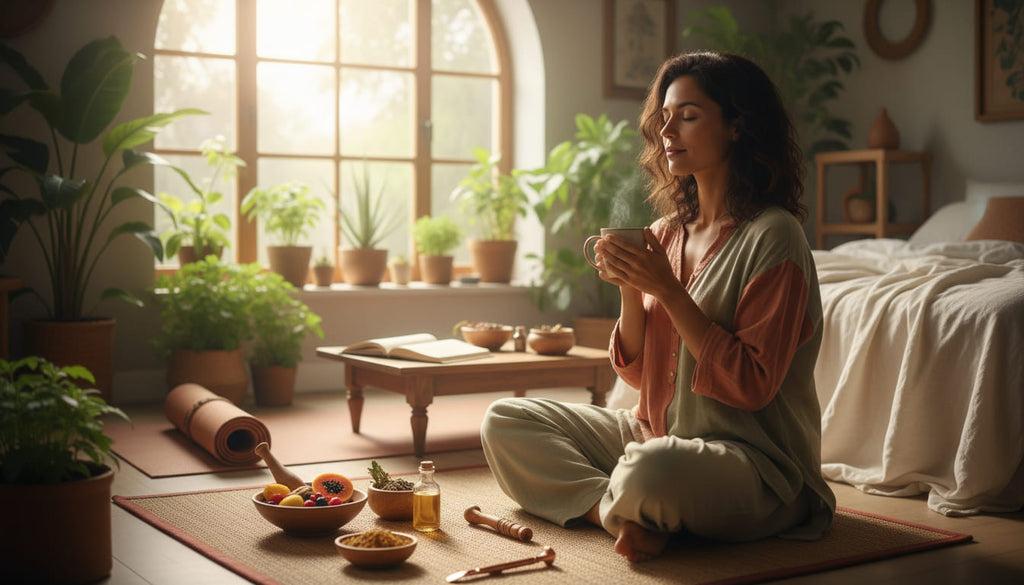
Ayurveda is an ancient Indian system of traditional medicine that emphasizes balance, daily routines, mindful eating, and overall well-being. It encourages people to develop healthy habits that support the body and mind naturally.
Incorporating simple Ayurvedic-inspired practices into your daily routine may help you build a healthier lifestyle, manage everyday stress, and become more mindful of your physical and mental well-being.
You do not need to change your entire lifestyle overnight. Small, consistent steps can make healthy living easier and more sustainable.
1. Start your day with a glass of water
Begin your morning with a glass of plain water. Warm water is a comfortable option if you prefer it. Staying hydrated supports normal digestion and helps your body maintain its fluid balance.
Daily tip: Keep a glass of water near your bedside or drink some after waking up.
2. Eat fresh, balanced and seasonal foods
Ayurveda traditionally emphasizes freshly prepared meals and eating according to your needs. Include a variety of vegetables, fruits, whole grains, pulses, and healthy sources of protein in your daily diet.
Daily tip: Choose a balanced home-cooked meal instead of relying frequently on highly processed foods.
3. Maintain regular meal timings
Eating meals at reasonably consistent times can help establish a predictable daily routine. Pay attention to your hunger and fullness cues, and avoid eating more than is comfortable.
Daily tip: Try to maintain a regular breakfast, lunch, and dinner schedule that suits your lifestyle.
4. Practice yoga and meditation
Yoga combines movement, breathing, and awareness, while meditation encourages mental calmness. Practising regularly may help improve flexibility, manage stress, and support emotional well-being.
Daily tip: Start with 10–15 minutes of gentle yoga, stretching, or meditation.
5. Include herbs and spices in your cooking
Ginger, turmeric, cumin, coriander, and other familiar kitchen spices are commonly used in Indian cooking and Ayurvedic traditions. They add flavour and variety to meals.
Daily tip: Use spices as part of a balanced diet. Remember that concentrated herbal supplements may have side effects or interact with medicines.
6. Choose light and balanced meals in the evening
Ayurvedic traditions often encourage eating in a way that feels comfortable and supports digestion. A balanced evening meal with vegetables, pulses, whole grains, or another protein source can be a practical choice.
Daily tip: Eat at a time that suits your schedule and avoid going to bed immediately after a heavy meal.
7. Prioritize quality sleep
Sleep is essential for physical recovery, concentration, mood, and overall health. Maintaining a consistent sleep schedule can help support your body’s natural sleep-wake rhythm.
Daily tip: Aim for 7–9 hours of sleep if you are an adult, and establish a relaxing bedtime routine.
8. Spend time outdoors and connect with nature
Spending time outdoors, walking in a park, or enjoying morning daylight can support mood and help regulate your sleep-wake cycle.
Daily tip: Take a 15–20-minute walk outdoors when practical, while protecting yourself from excessive sun exposure.
9. Try gentle self-massage with suitable oil
Abhyanga, or oil massage, is a traditional Ayurvedic self-care practice. Some people find gentle massage relaxing and helpful for making their skin feel softer.
Daily tip: If you choose to use an oil, select one suitable for your skin and stop if irritation occurs. Avoid applying oil to broken or inflamed skin, and take care to prevent slipping in the bathroom.
10. Stay hydrated throughout the day
Water supports normal body functions, including temperature regulation and digestion. Your hydration needs vary depending on activity, climate, diet, and health conditions.
Daily tip: Drink water regularly throughout the day and increase your intake when appropriate in hot weather or during physical activity. Follow any fluid restrictions advised by your healthcare professional.
Frequently asked questions
Some useful habits include eating balanced meals, staying hydrated, maintaining regular sleep and meal schedules, practising yoga or meditation, and making time for relaxation.
Yes. Many lifestyle practices, such as mindful eating, gentle exercise, adequate sleep, and stress management, can fit into a modern routine. Herbal medicines and supplements should be discussed with a qualified healthcare professional, especially if you take prescription medication.
It varies from person to person and depends on the habit, consistency, and individual health. Some people notice improvements in their daily routine or relaxation relatively quickly, while other changes may take longer.
Not every Ayurvedic practice is suitable for every person. Dietary restrictions, allergies, pregnancy, existing health conditions, and medications can affect what is appropriate. Choose practices that suit your needs and seek professional guidance when necessary.
No. You can adopt many traditional lifestyle practices without taking supplements. Herbs and Ayurvedic products are not automatically safe because they are natural, and they should not replace prescribed medical treatment.