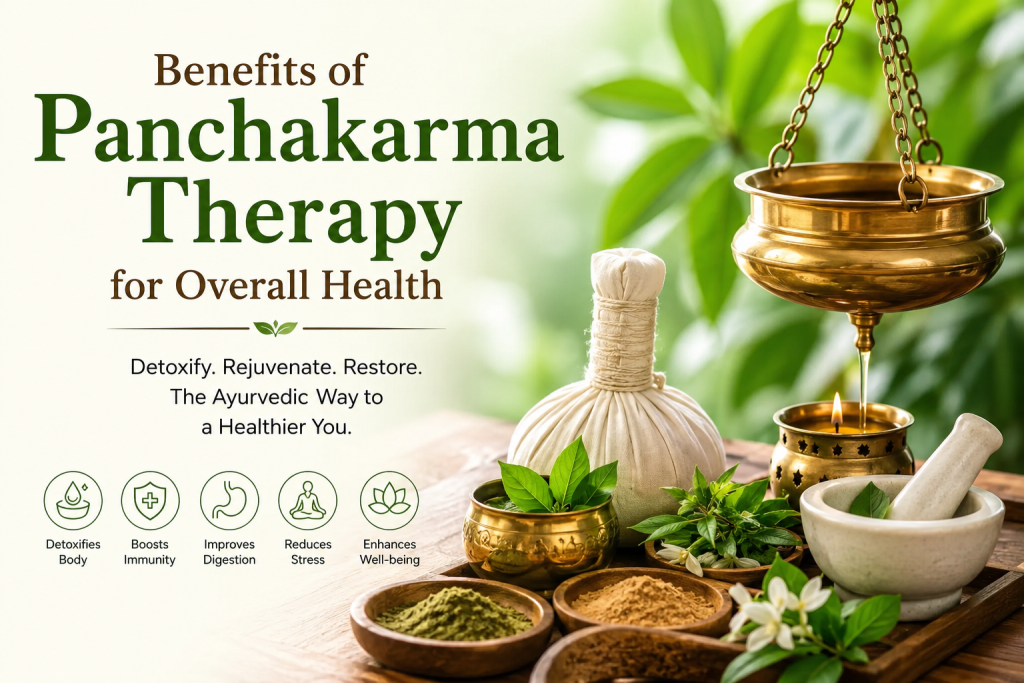
Ayurveda is one of the world’s oldest holistic healthcare systems, focusing on balancing the body, mind, and spirit. Among its most renowned therapies is Panchakarma, a comprehensive cleansing and rejuvenation process designed to eliminate toxins (Ama), restore the balance of the three doshas—Vata, Pitta, and Kapha—and promote overall wellness. Panchakarma is traditionally described as a structured detoxification and rejuvenation approach within Ayurveda.
Whether you’re dealing with digestive issues, fatigue, stress, or simply looking to improve your well-being, Panchakarma can be an important part of an Ayurvedic wellness plan when performed under qualified supervision.
What is Panchakarma?
The word Panchakarma comes from Sanskrit:
- Pancha = Five
- Karma = Actions or Procedures
These five cleansing procedures are traditionally selected according to an individual’s health status and Ayurvedic assessment:
- Vamana (Therapeutic Emesis)
- Virechana (Therapeutic Purgation)
- Basti (Medicated Enema)
- Nasya (Nasal Therapy)
- Raktamokshana (Bloodletting – used selectively in traditional practice)
Not every person undergoes every procedure. Ayurvedic practitioners customize treatment according to the individual’s constitution (Prakriti), current imbalance, age, and health condition.
Top Benefits of Panchakarma Therapy
1. Natural Body Detoxification
Panchakarma helps remove accumulated toxins from the digestive system and body tissues according to Ayurvedic principles. Many people report feeling lighter and more energetic after completing therapy.
Benefits include:
- Better digestion
- Improved metabolism
- Reduced heaviness
- Increased energy levels
2. Improves Digestive Health
A healthy digestive fire (Agni) is considered essential in Ayurveda.
Panchakarma may help:
- Reduce bloating
- Improve appetite
- Support nutrient absorption
- Promote regular bowel movements
3. Balances the Three Doshas
When Vata, Pitta, and Kapha remain balanced, the body functions more efficiently.
Panchakarma aims to:
- Restore dosha balance
- Improve natural body functions
- Support long-term wellness
4. Boosts Immunity Naturally
A healthy digestive system and balanced body are believed in Ayurveda to support stronger immunity.
Many people experience:
- Better resistance to seasonal illnesses
- Increased vitality
- Improved recovery
5. Helps Reduce Stress
Modern lifestyles often contribute to mental fatigue and stress.
Panchakarma therapies like:
- Abhyanga (Ayurvedic massage)
- Shirodhara
- Herbal steam therapy
are commonly used to encourage relaxation and mental calmness.
6. Better Sleep Quality
Many individuals report improved sleep after Panchakarma due to relaxation and stress reduction.
Benefits may include:
- Easier sleep onset
- Better sleep quality
- Feeling refreshed
7. Supports Healthy Skin
Since Ayurveda links skin health with digestion and internal balance, Panchakarma may contribute to:
- Clearer skin
- Natural glow
- Reduced dullness
8. Improves Joint Flexibility
Oil therapies and herbal treatments used during Panchakarma are traditionally used to:
- Reduce stiffness
- Improve flexibility
- Support comfortable movement
9. Enhances Mental Clarity
Many people experience:
- Better concentration
- Improved memory
- Reduced mental fatigue
- Increased productivity
10. Promotes Overall Wellness
Rather than focusing on symptoms alone, Panchakarma aims to improve overall physical and mental well-being through personalized Ayurvedic care.
Who Can Benefit from Panchakarma?
Panchakarma may be suitable for individuals seeking Ayurvedic support for:
- Digestive problems
- Stress and anxiety
- Fatigue
- Lifestyle-related imbalances
- Seasonal wellness routines
- General rejuvenation
It should always be performed after consultation with a qualified Ayurvedic practitioner, especially if you have a medical condition, are pregnant, or are elderly.
Lifestyle Tips After Panchakarma
To maintain the benefits:
- Eat freshly prepared, balanced meals
- Drink adequate water
- Practice yoga and meditation
- Get sufficient sleep
- Avoid processed foods
- Follow your practitioner’s dietary guidance
Conclusion
Panchakarma is one of Ayurveda’s most well-known cleansing and rejuvenation therapies. When tailored to the individual and performed under professional supervision, it may support digestive health, relaxation, overall wellness, and a balanced lifestyle. While many people seek Panchakarma for preventive health, it should complement—not replace—appropriate medical care for diagnosed conditions.
Frequently Asked Questions (FAQs)
When performed by a qualified Ayurvedic practitioner after proper assessment, Panchakarma is generally intended to be a personalized therapy. It is not appropriate for everyone and should not be self-administered.
Depending on the treatment plan, Panchakarma programs commonly range from 7 to 21 days.
Many people use Panchakarma as part of an Ayurvedic approach to stress management because therapies such as Abhyanga and Shirodhara are designed to encourage relaxation.
Some Ayurvedic practitioners recommend seasonal Panchakarma, while others individualize the schedule based on a person’s constitution and health goals.