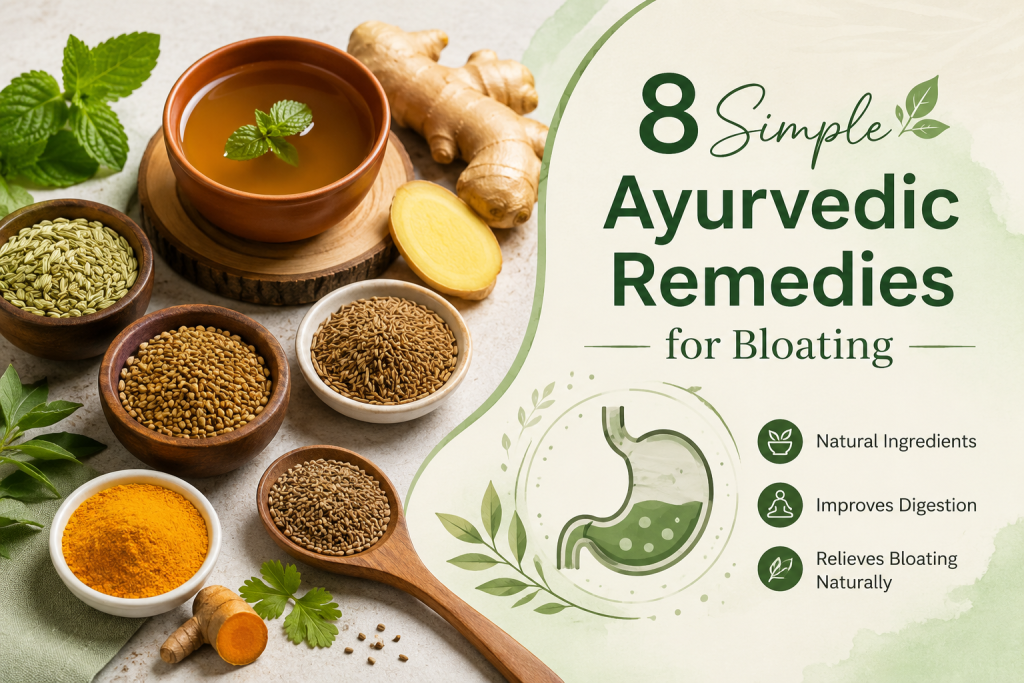
Natural Ways to Ease Gas & Improve Digestion
8 Simple Ayurvedic Remedies for Bloating
Bloating after eating can make you feel uncomfortable for a long time. If you notice a swollen belly, extra gas, burping, or a feeling of heaviness, your digestion might need some attention. According to Ayurveda, bloating occurs when the Vata dosha is out of balance, and your digestive fire (Agni) is weak.
Ayurveda aims to address the root cause of digestive issues, not just cover up the symptoms. It helps improve digestion and naturally prevents gas. This guide offers simple Ayurvedic remedies for bloating that you can try every day.
Why Does Bloating Occur According to Ayurveda?
Ayurveda explains bloating as the result of incomplete digestion. When food is not digested properly, toxins known as Ama accumulate inside the digestive tract. Combined with aggravated Vata, this leads to:
- Excessive gas formation
- Abdominal discomfort
- Stomach tightness
- Frequent burping
- Irregular bowel movements
- Feeling full even after eating small meals
Strengthening digestion is the key to lasting relief.
1. Start Your Day with Warm Water
One of the easiest Ayurvedic habits is drinking a glass of warm water immediately after waking up.
Warm water helps:
- Stimulate digestive enzymes
- Improve bowel movement
- Reduce accumulated gas
- Support detoxification
Avoid chilled water, especially during meals, as it may weaken digestion.
2. Drink Cumin, Coriander & Fennel Water
The traditional combination of jeera (cumin), dhania (coriander), and saunf (fennel) is widely valued in Ayurveda.
These herbs may help:
- Reduce bloating
- Support healthy digestion
- Calm stomach irritation
- Minimise gas formation
Boil equal parts of these three seeds, strain the water, and drink it warm throughout the day.
3. Eat Fresh Ginger Before Meals
Fresh ginger is one of the most effective digestive herbs in Ayurveda.
Eat a small piece of ginger with some rock salt and a few drops of lemon juice before meals. This can help:
- Stimulate digestive fire (Agni)
- Improve appetite
- Reduce heaviness
- Prevent bloating after eating
4. Avoid Overeating
Even healthy foods can lead to gas if you eat more than your body can handle.
Ayurveda recommends:
- Eating until about 75% full
- Chewing food slowly
- Avoiding frequent snacking
- Giving enough time between meals
Letting your body rest between meals helps your digestion work better.
5. Practice Vajrasana After Meals
Unlike most yoga poses, Vajrasana can be practised immediately after eating.
Sitting in Vajrasana for 5–10 minutes may help:
- Improve digestion
- Reduce abdominal pressure
- Support nutrient absorption
- Decrease post-meal bloating
It is a simple daily practice requiring no equipment.
6. Use Digestive Ayurvedic Spices
Several kitchen spices naturally support digestion.
Useful spices include:
- Ajwain (Carom seeds)
- Hing (Asafoetida)
- Black pepper
- Turmeric
- Cumin
- Fennel
Adding these spices to daily meals may help reduce gas and improve digestive comfort naturally.
7. Maintain Regular Meal Timing
Irregular eating habits often disturb digestion.
Ayurveda encourages:
- Eating meals at consistent times
- Avoiding late-night dinners
- Finishing dinner at least 2–3 hours before bedtime
- Eating only when genuinely hungry
Having meals at the same times each day helps keep your digestion steady.
8. Support Digestion with Ayurvedic Herbs
Some Ayurvedic herbs have long been used to maintain balanced digestion and relieve frequent bloating.
Common herbs include:
- Triphala
- Haritaki
- Amla
- Bibhitaki
- Jeera
- Saunf
- Ginger
These herbs work best when you choose them according to your body type and digestive needs.
Lifestyle Tips to Prevent Bloating Naturally
Along with these Ayurvedic remedies, healthy habits can support your digestion over time:
- Stay physically active every day.
- Avoid lying down immediately after meals.
- Reduce processed and oily foods.
- Eat freshly prepared meals whenever possible.
- Drink adequate water throughout the day.
- Manage stress through meditation or deep breathing.
- Sleep for 7–8 hours every night.
Small lifestyle improvements often make a significant difference.
How Ayurveda Helps Treat Chronic Bloating
Unlike quick symptom relief, Ayurveda aims to improve digestion from its root.
An Ayurvedic approach may include:
- Balancing aggravated Vata dosha
- Improving digestive fire (Agni)
- Reducing Ama (digestive toxins)
- Supporting healthy gut function
- Encouraging better nutrient absorption
With consistent dietary habits and herbal support, many people experience improved digestive comfort over time.
Ayurvedic Digestive Support from Kudos Ayurveda
If bloating, indigestion, and gas occur frequently, dietary changes alone may not always be sufficient. Ayurveda recommends strengthening digestive function with carefully selected herbal formulations under expert guidance.
Kudos Ayurveda offers Ayurvedic formulations made with traditional herbs to support healthy digestion, improve gut function, and help maintain digestive balance. When combined with mindful eating habits and an active lifestyle, these formulations can become part of a comprehensive digestive wellness routine.
Frequently Asked Questions (FAQs)
Warm water, ginger, cumin-fennel-coriander water, Ajwain, and maintaining a strong digestive fire are among the most commonly recommended Ayurvedic approaches for bloating.
Ginger, fennel, Ajwain, Hing, and Triphala are traditionally used in Ayurveda to support digestion and reduce gas formation.
Ayurveda focuses on correcting the underlying digestive imbalance. Long-term improvement depends on proper diet, lifestyle, and individualised Ayurvedic care.
Yes. Fresh ginger is widely used in Ayurveda to stimulate digestion, reduce heaviness, and support healthy digestion after meals.
Vajrasana is one of the most recommended yoga postures after meals because it supports digestion and helps reduce bloating naturally.
Yes. Ayurvedic dietary practices, herbs, and lifestyle modifications aim to strengthen Agni (digestive fire), which supports better digestion and overall gut health.